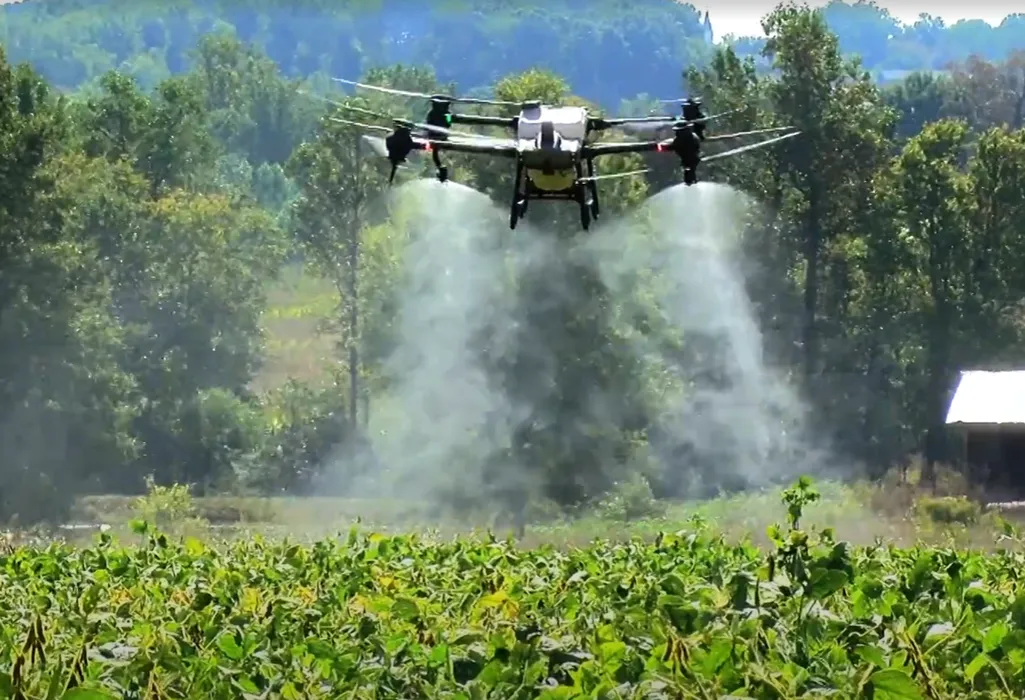
Interest in using drones for pesticide application is booming in North Carolina, but getting started requires navigating state and federal rules. Whether you plan to spray your own crops or operate commercially for hire, state law now requires both private and commercial applicators to hold specific aerial pesticide certifications before launching.
Overview of Regulations
While core federal flight rules apply to everyone, North Carolina enforces distinct licensing, inspection, and certification paths depending on whether you operate as a private or commercial pesticide applicator.
All Drone Applicators
- FAA Part 107 (or appropriate FAA waivers for heavier craft): Remote Pilot Certificate for drones weighing under 55 pounds (including pesticide and carrier).
- FAA Part 137: Operating Certificate for dispensing "economic poisons" (pesticides).
- UAV Registration: Drones must be registered with the FAA.
Commercial Drone Pesticide Certification
To become a commercial drone pesticide applicator in North Carolina, you must first become certified. This means passing (>70%) three exams—the Commercial Core exam, Aerial Methods exam, and a specialty category exam—and completing a one-year apprenticeship logging 125 flight hours under a licensed aerial applicator pilot (category 027, which applies to all licensed aerial applicators, regardless of aircraft type). Finally, commercial aerial applicators must secure an NC Aerial Contractor License (category 028; $75/year), pay a $25 annual aircraft inspection fee per drone (all fees payable to the NCDA&CS), and maintain their license on a two-year recertification cycle along with the continuing education credits required for those categories. License application and drone inspection forms are available for download on the NCDA&CS website.
Private Drone Pesticide Certification
North Carolina private applicators (growers treating their own or leased land) have a streamlined aerial certification compared to commercial operators, as they are exempt from the 125-hour apprenticeship requirement and annual per-drone inspection fees. While private applicators must pass (>70%) both the Private Applicator exam and the Aerial Methods exam, they are not required to hold additional certification in a specialty category. Also, unlike commercial aerial applicators who must recertify every two years, aerial certification added to a private applicator certification renews within the same 3-year recertification cycle as the private applicator’s pesticide certification, regardless of when it was added.
The table below highlights key differences in certification requirements between private and commercial aerial applicators.
Private vs. Commercial Aerial Applicator Requirements
| Feature / Requirement |
Private Aerial Applicators |
Commercial Aerial Applicators |
| Description |
Farmers/landowners applying pesticides on land they own or lease. |
Individuals or businesses applying pesticides for hire/compensation. |
| Certification exam requirements |
Private (ground) Applicator certification: Must pass (>70%) the NC Private Pesticide Applicator Exam. (closed book exam).
To add aerial authorization, must also pass the Aerial Methods Exam (open book exam)
|
Must pass three exams (>70%): Core Exam, Aerial Methods Exam, and a specialty category exam (e.g., Ag Pest–Plant). |
| Pesticide License / Certification Fees |
Certification required ($10 fee valid for 3 years). No additional state license fee is required to add aerial authority.
|
Commercial License required ($75 annual license fee for pilots/operators). Requires a separate Aerial Contractor License ($75/yr) if operating a business (see below) |
| Apprentice Period & Hours |
Exempt from the 125-hour flight logging and 1-year apprentice requirement. |
Required: Must start with an Aerial Apprentice License under a licensed pilot until completing 125 hours and 1 year of flight experience. |
| Business License |
Not required (no Aerial Contractor License needed). |
Required: Must hold or operate under an NC Aerial Contractor License ($75/yr). |
| Aircraft Fees & Inspection |
No annual aircraft inspection fee. |
$25 annual inspection fee per aircraft. |
| Certification Period |
Valid for 3 years |
Valid for 2 years. |
| Continuing Education (CEUs) |
Must earn 4 CEUs total (2 hours of V credit + 2 hours of X credit, with 1 hour specific to Aerial) every 3 years. |
Must earn specific aerial recertification credits every 2 years (1 Aerial credit + 3 Category credits). |
Aerial License Types in North Carolina
North Carolina issues three primary types of commercial aerial pesticide licenses depending on an individual's or business' operational role:
- Apprentice-Aerial Pesticide Applicator License (Category 029): Designed for new aerial pilots working toward full commercial licensing. Apprentices must operate under the direct supervision of a licensed aerial applicator pilot while completing 1 year of flight experience and logging 125 hours of aerial application work.
- Pilot-Aerial Pesticide Applicator License (Category 028): Issued to individual pilots who have met all FAA requirements, passed the required NCDA&CS written exams, and completed their 125-hour apprenticeship. This license authorizes the pilot to physically operate the aircraft and apply pesticides commercially.
- Aerial Contractor License (Category 027): The business license required for any individual, firm, or company offering commercial aerial pesticide application services for hire ($75 annual fee). A business operating aircraft must hold a contractor license in addition to employing or contracting licensed aerial pilots.
Note: Government and utility employees conducting aerial applications operate under a separate Public Operator - Aerial license class (Categories 034, 035, or 036, respectively), which follows the same testing standards but waives standard license fees for public agency staff. Federal and state public aerial applicators fall under license category 034, while city and county workers are licensed under category 035. See NCDA&CS Pesticide License Categories for more information.
Getting Started
FAA Resources
To register your drone via the FAA go to the DroneZone portal. For an in-depth guide to all federal rules and regulations regarding drones, go to Getting Started.
Certification Exam Registration
Pesticide applicators seeking certification must take the appropriate exam(s), either online or in person. To find upcoming exam dates, exam fees, and to register for an exam, visit the NCDA&CS Structural Pest Control and Pesticides, Pesticide Section.
Training and Exam Preparation
Exam questions are based on information found in training manuals, which can be purchased from the North Carolina Pesticide Safety Education Program (click on "Menu" to find the link to “Pesticide Manuals”). You can also register for an in-person exam preparation training course on the NC State Pesticide Safety Program website: North Carolina Pesticide Safety Education Program (click on "Menu" to find the link to "Pesticide Schools.")
Certification and Licensing Resources and Support:
Certification and recertification information is available on the NCDA&CS Pesticide Licensing & Certification website. To register for pesticide certification exams go to NCDA&CS Pesticide Certification Exams. For general inquiries and information about obtaining your aerial certification, email: NCpesticidecredit@ncagr.gov or call or call 984-236-4575.